A GUIDE FOR FAMILIES IN BLOOFIELD, GLEN RIDGE & MONTCLAIR, NJ
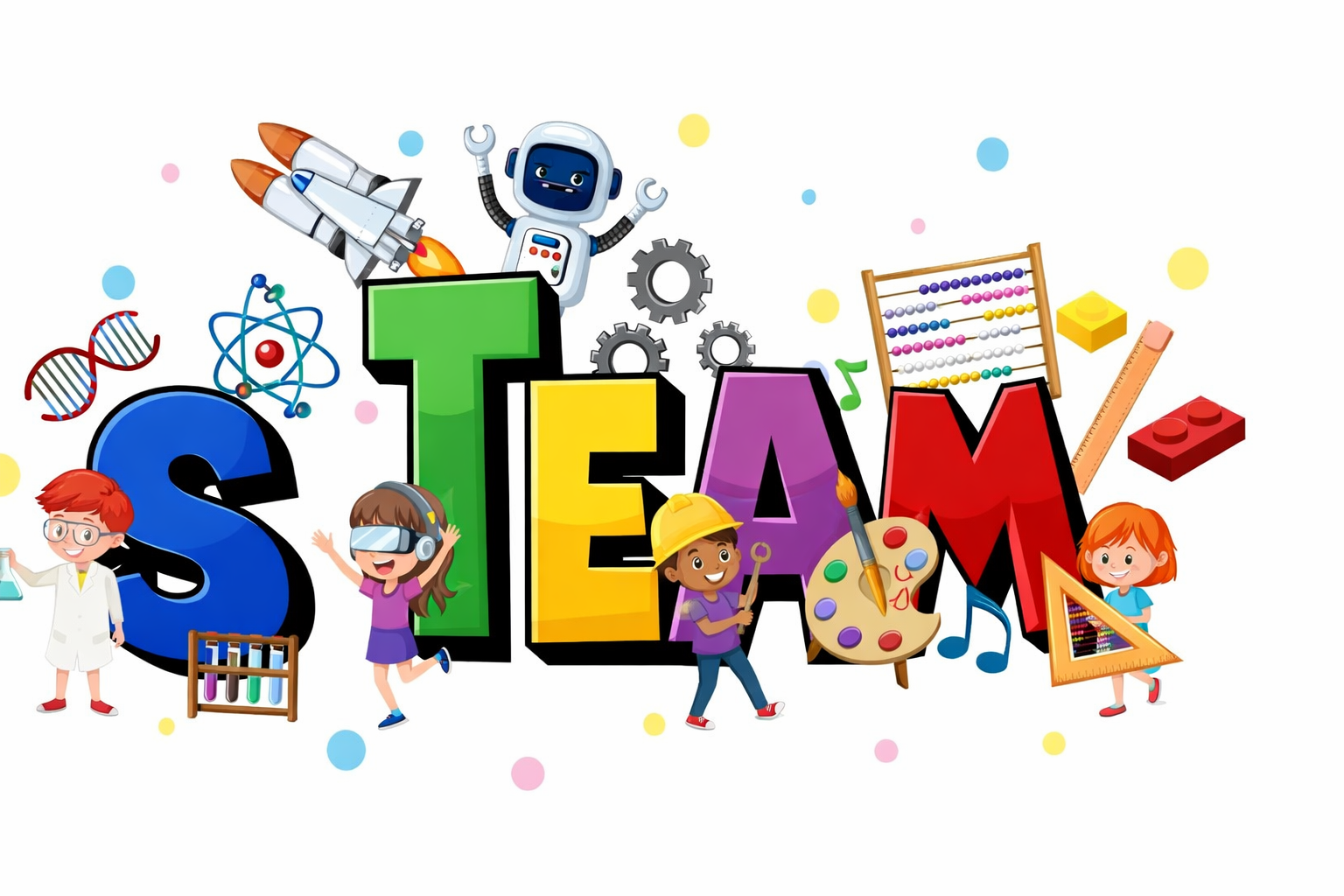
If you’ve been exploring preschools in Bloomfield, Glen Ridge, or Montclair, you’ve probably come across the term STEAM — Science, Technology, Engineering, Arts, and Mathematics. But what does it actually mean for a three- or four-year-old? And why does it matter so early?
As educators who work with children ages 2.5 through Kindergarten every day, we want to answer that question honestly — not with buzzwords, but with what we actually see happening in our classrooms.
The early years are a window — and it closes
Research in early childhood development consistently shows that the brain grows faster between birth and age five than at any other point in life. This isn’t just about memorizing letters or numbers. It’s about building the thinking patterns that will shape how a child approaches problems for decades to come.
STEAM learning in the preschool years works precisely because it meets children where their brains already are: wired for curiosity, experimentation, and play. When a child asks “why does this float and that sinks?”, they are doing science. When they figure out how to balance blocks in a tower, they’re doing engineering. The job of a great early childhood educator is to recognize those moments and expand them — not replace them with worksheets.
STEAM vs. STEM: why the “A” matters so much
You may have seen both acronyms — STEM and STEAM. The difference is the inclusion of the Arts. And in early childhood education, that “A” is not decorative.
The arts — drawing, music, storytelling, movement — are the primary languages children use to process and express their understanding of the world. When STEAM learning weaves artistic expression into science and math exploration, children are able to make meaning of what they discover. A child who paints what they observed in a nature experiment is not just doing art; they’re consolidating a scientific concept through creative representation.
At Leonardo da Vinci International Academy, our curriculum is built around this integration. Our core pillars — Music & Movement, STEAM exploration, Cooking Up Creativity, World Languages, and Outdoor Education — are intentionally designed to overlap, so that learning never feels siloed.
5 real benefits of STEAM education in preschool
Benefit #1. Problem-solving skills develop naturally
When children are given open-ended challenges — build a bridge that holds weight, find out what happens when you mix colors — they practice persistence, hypothesis-making, and adapting when things don’t work. These are lifelong skills, not preschool skills.
Benefit #2. Curiosity is treated as a learning tool
Children who are allowed to ask questions and investigate their own theories become more engaged learners throughout school. STEAM learning in a safe and nurturing environment teaches children that not knowing the answer is the beginning of learning — not a failure.
Benefit #3. Language and math emerge through doing
STEAM activities are naturally rich in vocabulary (heavy, liquid, symmetry, pattern) and early math concepts (more, fewer, longer, equal). Children absorb these words and ideas in context — which is far more effective than drilling them in isolation.
Benefit #4. Collaboration and communication are built in
Most STEAM activities are social. Children plan together, disagree, negotiate, and celebrate results as a group. These dynamics — guided by experienced and nurturing educators — are among the most powerful social-emotional learning opportunities in early childhood.
Benefit #5. A positive relationship with learning is formed early
Children who experience school as a place of discovery — where they are respected as thinkers — develop confidence and intrinsic motivation. That foundation matters more in the long run than any specific content learned at age four.
What STEAM looks like in our classrooms
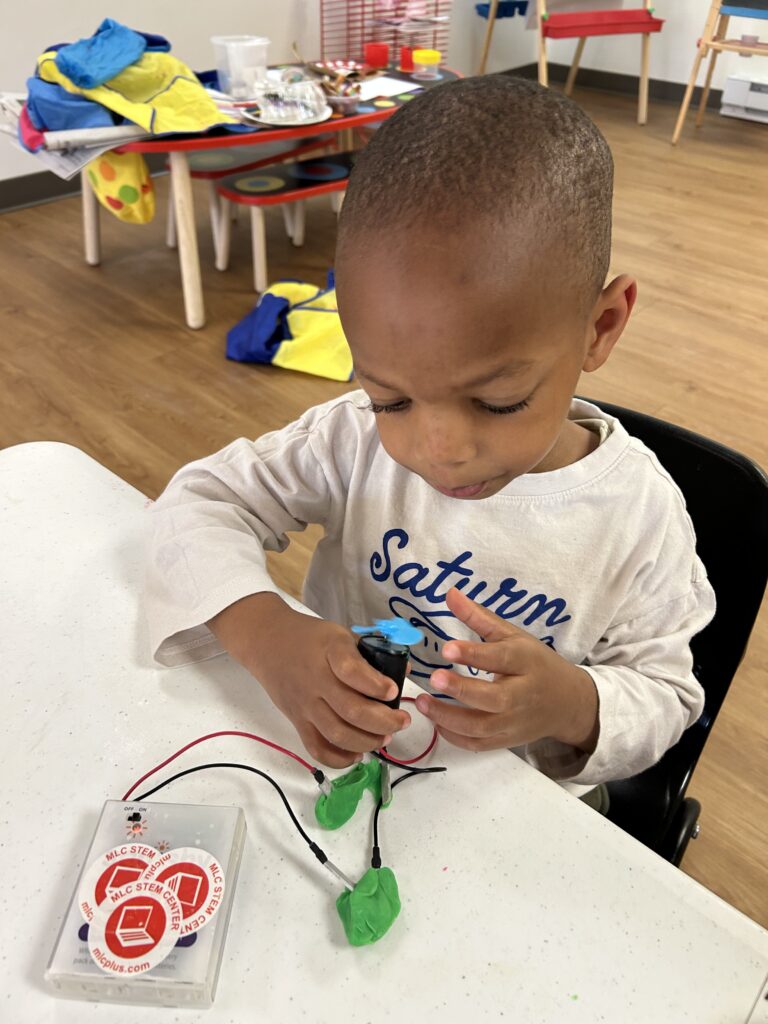
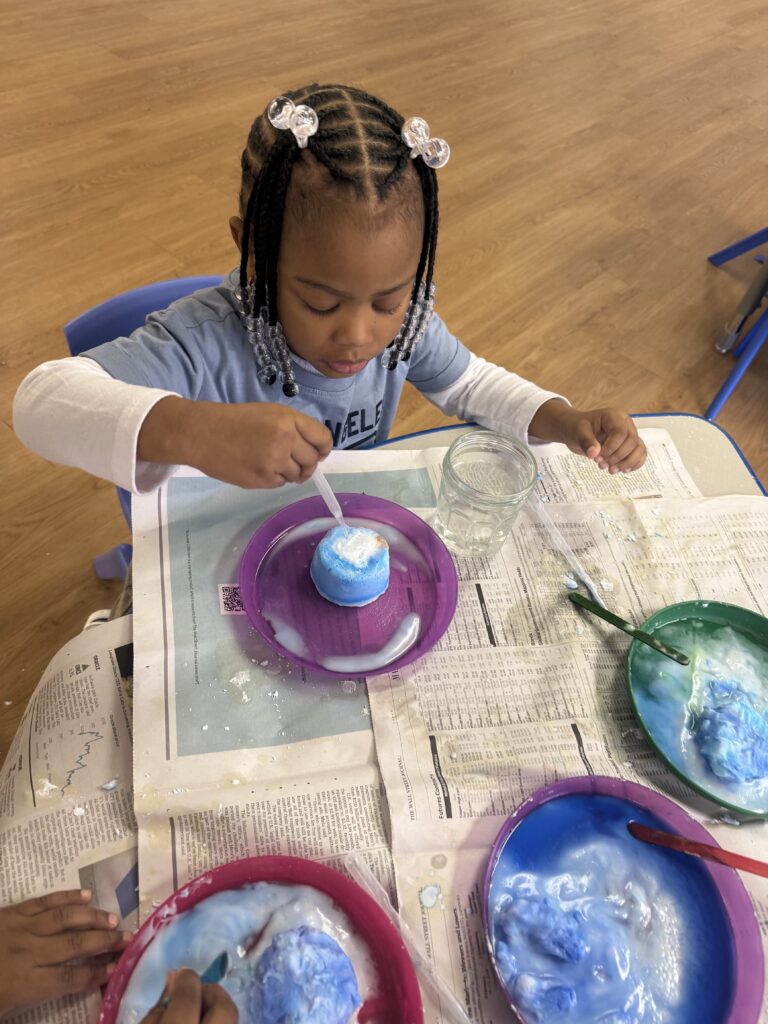
STEAM at the preschool level doesn’t look like a middle school science lab. It looks like a child at the water table figuring out which objects float. It looks like a group building a marble run from cardboard tubes and asking their teacher to hand them tape — because they have a hypothesis to test. It looks like a cooking activity where measuring, mixing, and transformation happen right in front of curious eyes.
Our certified preschool teachers and CPR and First Aid certified educators are trained to facilitate these experiences intentionally — asking the right questions, introducing the right vocabulary, and knowing when to step back and let discovery unfold.
We also layer in our World Languages program — Spanish, French, and Mandarin — because learning to name concepts in multiple languages deepens conceptual understanding in ways that monolingual instruction simply cannot.
Is your child ready to become a little scientist?
Every child is. Curiosity is not a skill — it’s a human birthright. The role of a great preschool is to protect and nurture it.
If you’re looking for a licensed preschool in the Bloomfield, Glen Ridge, or Montclair area where STEAM learning is woven into daily life — not treated as an add-on — we’d love to show you what that looks like in person!
About Leonardo da Vinci International Academy
We are a warm, non-denominational licensed preschool and childcare center in Bloomfield, NJ, welcoming children ages 2.5 through Kindergarten and serving families in Bloomfield, Glen Ridge, and Montclair. Our school is a New Jersey Department of Children and Families licensed preschool and daycare, led by certified early childhood professionals in a safe and nurturing learning environment. We offer preschool, extended care from 7:30 AM to 6:00 PM, and enrichment programs built on our core pillars: Music & Movement, World Languages, STEAM exploration, Cooking Up Creativity, and Outdoor Education.